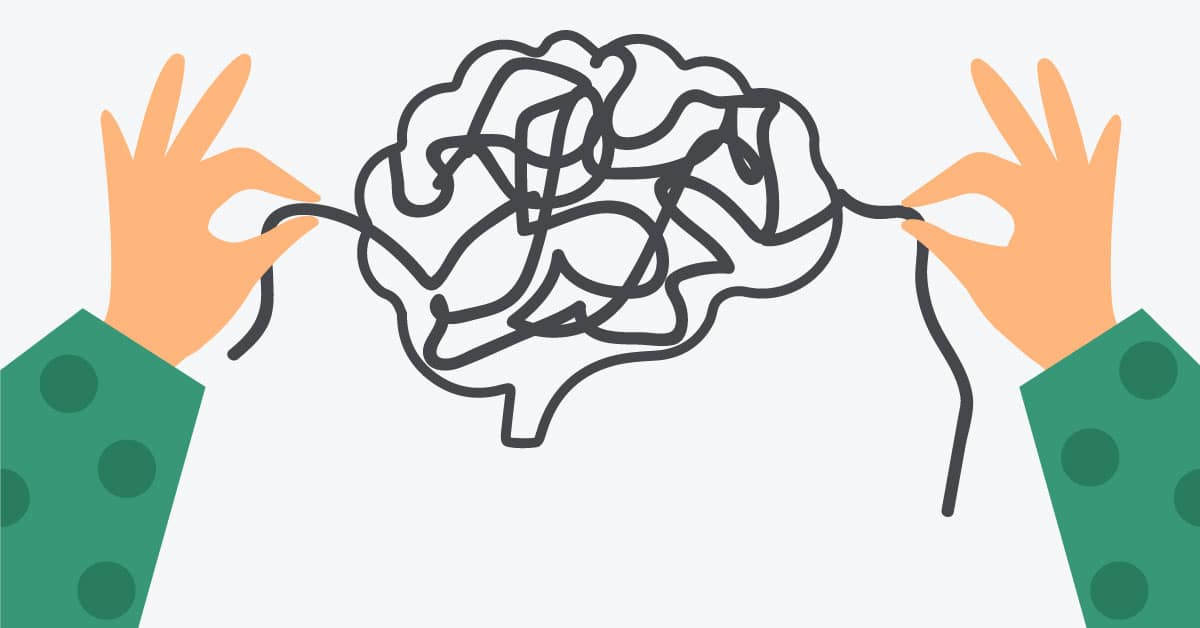
It’s been nearly 15 years since my youngest child was given a neurodivergent diagnosis of Autism Spectrum Disorder. (Professionals really hammered the “disordered” part home to me, and it was painful every time I heard it.) As we navigated these well-intentioned professional offices, I heard many new terms but had no idea what they meant and came to understand this language as “insider language.” This type of language is common in many specialized groups ranging from sports to hobbies. The ability to use insider language identifies people who have valuable, in-depth knowledge that a newcomer is seeking and sets up those who use insider knowledge as experts in their field. It’s important to know the danger in using insider language with a family that has a new neurodivergent diagnosis.
- The terms have no meaning to their current reality.
- Some terms numerate deficiencies on a checklist which can produce parental guilt or shame.
- The way some professionals use terms is clinical and their delivery does not use compassion.
- These neurotypical professionals use medical models which do not incorporate the lived experiences of neurodivergent individuals.
Since this insider language that doctors and therapists use is so weighted, I want to take this opportunity to help break some of it down for you.
The following are five terms you are likely to run into with a neurodivergent diagnosis.
1. Dysregulated/Emotional dysregulation
This is a term that is thrown around by medical and education professionals. Personally, I found it intimidating and slightly terrifying when it was used to describe my children. It sounds like an awful disease that I caused and needed to eradicate.
I prefer this simple and concrete definition: Dysregulation is an emotional response that is expressed outwardly toward an overwhelming stimulus. It is very real to the person experiencing it, and another person who is not experiencing that same level of distress to the same stimulus should never label the distressed individual as wrong. A clear distinction must be made between the response (such as throwing a chair) that isn’t helpful and the person making the response. We must be very clear with our neurodiverse children that some of their responses when they are dysregulated can be harmful to themselves and others and should not be excused. We should use these opportunities to equip our children with skills to cope with stressful things in their environment and to advocate for themselves when they need a change.
2. Sensory processing issues/disorder
Many neurodiverse brains are incredibly in tune with their environments, more so than a neurotypical brain. Sensitivity to the five senses—taste, touch, smell, sight and hearing—are not uncommon. My husband is highly sensitive to garlic and truffle oil. We do not use these in our home. One of my children loves ketchup, but another reacts strongly to it. It gets interesting at dinnertime some days. It is incredibly hard for anyone who doesn’t know or love a neurodiverse child (or adult) to understand how loud music, bright lights, strong smells, itchy tags in clothing or food textures can cause such acute distress. Please be kind: these stressors are real, and they can make a neurodiverse child’s (or adult’s) life quite overwhelming. Long term exposure to any or all of these stimuli can cause a sensory overload.
In her work with sensory integration, Jean Ayres, an occupational therapist and educational psychologist, identified three other senses and sensory systems that are important to keep in mind. These additional senses are proprioception, interoception and the vestibular system. Proprioception is the system that uses the fluid in our inner ears to tell our brain where our body parts are. It is based on the idea that our muscles and joints have sensory receptors that are connected to our brain. Interoception is how our body tells our brain what is going on inside us— that we are hungry, full, or have “butterflies” in our stomach. Finally, the vestibular system knows if we are moving forward, backward, the tilt of our head and how we are turning and moving around.
3. Comorbidity
This is a very scary term that has nothing to do with death. Comorbidity is a clinical term that indicates when a neurodiverse child might have more than one diagnosis. This is true for up to one third of children formally diagnosed with a learning disability. Common overlaps are ADHD/anxiety, OCD/ADHD and autism/ADHD. The difficulty in this is that trying to manage one diagnosis can compete with managing another one. If you choose to use a medication, it can eliminate some symptoms while increasing others. I strongly suggest keeping all health care providers up to date on what your child is taking in order to prevent problems like this. It is possible that an OTC (over the counter) medication can interact with a prescribed medication intended for a separate diagnosis. A pharmacist is a great resource for discovering drug interactions.
4. Med Check
If you read my article about the 5 types of doctors you meet on a journey with a neurodiverse child, then you might be familiar with this term. A med check is a shorter appointment (usually 15-20 minutes) with a psychiatrist that is for reviewing prescribed medication to determine if they are working. Remember that most psychiatrists don’t do therapy.
5. Executive Functioning Skills
These are a set of skills that refer to the brain-based, cognitive processes that help us to regulate our behavior, make decisions and set and achieve goals. This is a very clinical definition, but if broken down, it means an individual’s brain is wired to perform in certain ways. A neurodivergent brain can be radically different from a neurotypical brain, and some of these executive functioning processes yield marvelous results while also causing stress in daily life. This is not an either/or situation. It is highly dependent on the environment where a neurodiverse brain thrives or struggles. Neurodivergent children often have difficulty with rigid systems and rigid personalities. Typical school situations favor neurotypical brains, and compliance is a main goal. However, this is not necessarily a great environment for neurodivergent brains. A better environment sets appropriate boundaries that allow for some flexibility about choices, teaches self-advocacy and coping skills, and models adaptability. Compliance is a necessary skill we teach our children, but blind obedience to all things is not.
The Executive Function skills are a set of mental skills that utilize our short-term working memory, flexible thinking, and self-control. There are a few neurodivergent diagnoses that are highlighted in the school environment: ADHD and autism are some of the most common ones. ADHD can look like daydreaming, lack of follow through, inability to start and carelessness. Autism can look like rigidity, refusal and oppositional defiance. Most likely, a neurodivergent child with one of these diagnoses is struggling with these executive skills.
Something I learned along my parenting journey is that a neurodivergent brain has trouble understanding what finished looks like. When I define that with my children, it brings clarity to both of us. A clean room might mean a walkable pathway to my ADHD child, but to my OCD child that means germ free.
A few great questions to help you complete this process with your own children might be:
What does that (insert term) look like?
This is what it (insert term) means to me; how about for you?
What will it (insert term) look like to be finished? What do you think it (insert term) will take to finish?
All of these questions are conversation starters to get moving from a stuck place. If in crisis or sensory meltdown, a child might help you to regulate them to a safe and social state. The questions can be later. I find it infinitely more helpful to ask WHAT or HOW questions instead of WHY questions?
Try “What was your thinking behind this?” or “How did you reach that conclusion?” instead of “Why did you do that?”
Going Forward
These terms are heavy. They have different stigmas and hidden meanings. I still struggle hearing some of them because they seem so defeatist. What brought me peace in hearing all this clinical insider language applied to my child is this: this is one tool that a professional uses to communicate with me. They have subject matter knowledge on their area of expertise but that does not make them an expert over me and my child and our mutual lived experiences. The information they provide is a snapshot of my child in the moments they are working with them. That information can be overwhelming but I can process it and use what works for me.